

Artificial intelligence is expanding rapidly. This growth demands huge amounts of energy. Data centers are power-hungry. They run 24/7. Tech leaders face a major energy problem. Renewables like solar and wind are not enough. They do not provide constant “baseload” power. The industry needs a new solution.
This report explores that solution. We are analyzing the trend of Nuclear for AI. Small Modular Reactors (SMRs) offer a path forward. This idea is moving from theory to reality. Top companies are now investing in this strategy. They see Nuclear for AI as a necessary next step. This analysis covers the trends. It covers the technology. It covers the future.
The AI Energy Crisis
What Is the AI Energy Crisis?
The AI energy crisis is a new, urgent problem. It comes from AI’s massive power needs. Large AI models require immense electricity. Training these models is very energy-intensive. Running AI queries also uses much power. Every search or command feeds this demand. This AI energy consumption grows every day. New models like GPT-5 are larger. They need even more power.
The tech industry built its infrastructure on a different scale. Now, data centers are becoming huge energy users. They are outpacing the grid’s capacity. This creates an energy shortfall. This shortfall is the AI energy crisis. Solving it is the top priority for tech giants. This is a core reason why AI needs nuclear energy.
How Much Power Does AI Really Use?
AI’s power usage is staggering. It is hard to measure exactly. But estimates are high and rising. Some reports say AI could use as much energy as a small country. Training a single large model can use gigawatt-hours of electricity. This is a massive footprint. The daily operation of AI services adds to this. Every ChatGPT query needs power. Every AI-generated image uses electricity.
This constant demand is the real issue. The total AI energy consumption is a major concern. It threatens corporate climate goals. It also strains existing power grids. Companies must find more power. They must find clean and reliable power. This search leads them to explore Nuclear for AI. The numbers are clear. Current energy sources cannot keep up.
Why Solar and Wind Are Not Enough
Solar and wind power are excellent green technologies. They are crucial for clean energy. But they have one major limitation. They are intermittent. Solar panels only work when the sun shines. Wind turbines only turn when the wind blows. They cannot provide 2-4/7 “baseload” power. AI data centers cannot stop. They must run 24/7. They need constant, stable, and predictable energy.
This is what “baseload” power means. Batteries can store some solar and wind energy. But storing energy at this massive scale is not yet practical. The cost is too high. The technology is not there. This creates a “baseload gap.” This gap is why AI needs nuclear power. Nuclear plants do not depend on the weather. They provide constant, reliable baseload power. This makes Nuclear for AI a very logical pairing.
The Solution: Small Modular Reactors (SMRs)
What Is a Small Modular Reactor (SMR)?
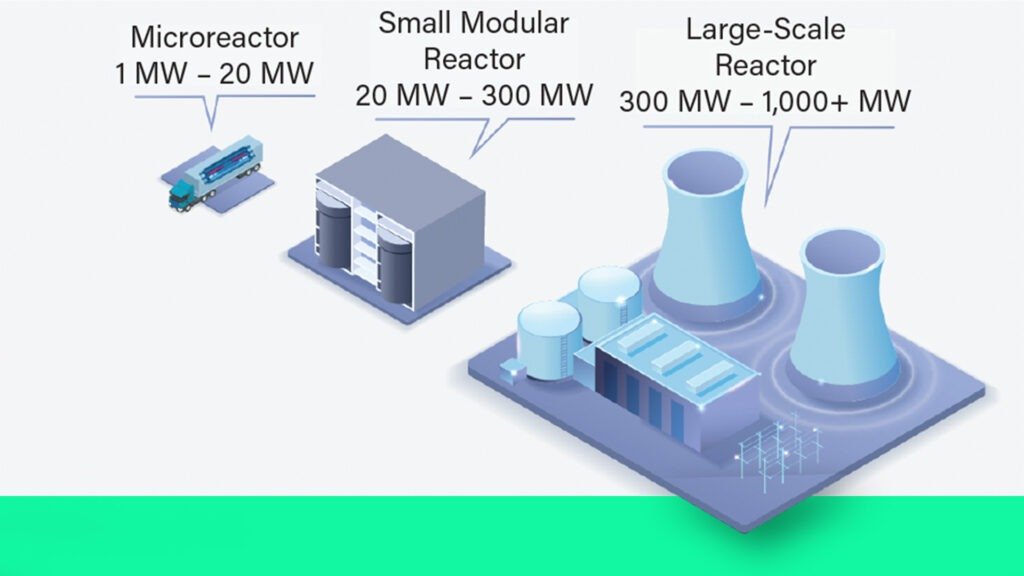
A Small Modular Reactor is a new type of nuclear plant. The “S” stands for Small. SMRs are much smaller than traditional nuclear plants. The “M” stands for Modular. Factories build the parts of an SMR. Then, workers assemble these parts on-site. This is faster and cheaper than custom builds. These reactors are a key part of the Nuclear for AI discussion. They are designed to be safer. They often use new, advanced cooling methods. People are searching “what is an SMR” more than ever. This technology is the main solution. It is the bridge between AI’s needs and clean energy. SMRs for data centers represent a focused, practical application. They are not like the giant plants of the past.
How Do SMRs Work?
SMRs work on the same basic principle as large reactors. They use nuclear fission. Fission is the process of splitting atoms. This process releases a huge amount of heat. The heat boils water. This creates high-pressure steam. The steam spins a turbine. The turbine generates electricity. The main difference is scale and safety. SMRs produce less power per unit. But they are much safer. Many designs use “passive safety” systems. This means they can shut down without human help. They rely on gravity or natural circulation. This prevents meltdown scenarios. This advanced safety is a key selling point. It makes the Nuclear for AI concept more acceptable to the public. It also makes them suitable for new locations.
SMRs vs. Traditional Nuclear
There are big differences between SMRs and traditional plants. Traditional plants are enormous. They can cost tens of billions of dollars. They take over a decade to build. They are complex, custom-built projects. This makes them risky investments. SMRs for data centers are the opposite. They are designed for mass production. This factory-built model lowers costs. It also speeds up construction.
A company could deploy an SMR in just a few years. SMRs are also more flexible. A data center can start with one SMR. It can add more modules as its power needs grow. This scalability is perfect for the fast-growing AI industry. This is why Nuclear for AI really means SMRs for AI. They are the right tool for the job.
Artificial Intelligence AI in Healthcare & Medical Field
The Key Players: Who Is Building This Future?
Why Microsoft and Google Are Hiring Nuclear Experts
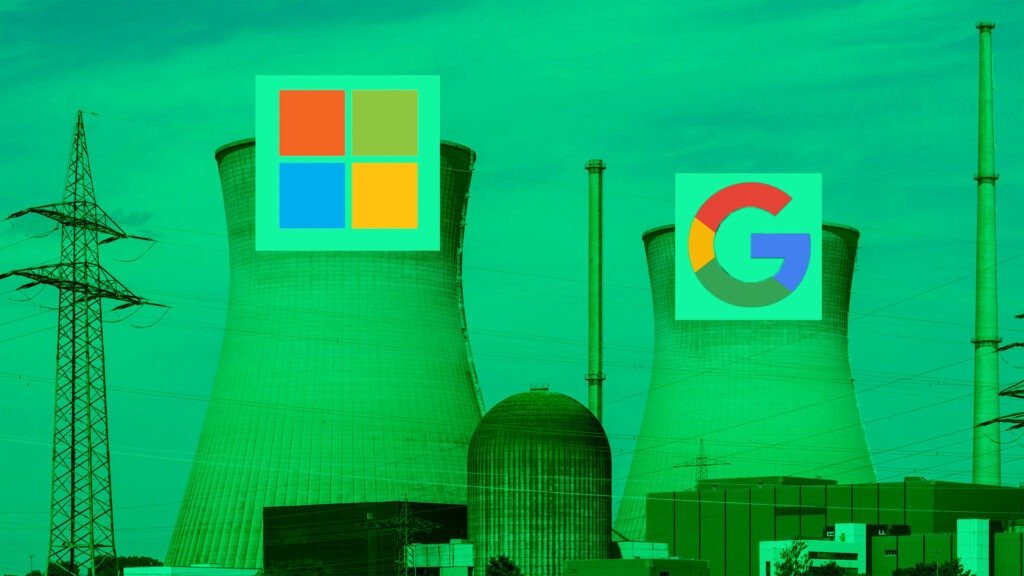
The tech industry’s biggest names are moving. Microsoft, Google, and Amazon see the energy problem. They are now hiring nuclear experts. Microsoft posted job listings for nuclear specialists. This move signaled serious industry intent. It was not just a research project. They need experts to plan their energy future. These experts will explore SMRs for data centers. They will analyze costs.
They will navigate regulations. This action proves the Nuclear for AI trend is real. Tech giants are not waiting. They are actively building teams. They want to secure their own power. This will give them a major competitive advantage. Their actions drive B2B interest in nuclear solutions.
What Is Oklo? (Sam Altman’s AI-Nuclear Connection)
Oklo is a prominent SMR company. It has gained massive public attention. This is because of its connection to Sam Altman. Sam Altman is the CEO of OpenAI. He is a leading figure in artificial intelligence. He is also the chairman of Oklo. This direct link is a major news driver. The Oklo SMR company is directly tied to AI’s leadership. This partnership is powerful.
It shows that the person building the AI also sees the energy problem. And he is investing in a nuclear solution. The Oklo SMR design is a “micro-reactor.” It is very small. It is designed to provide clean, reliable power off-grid. This is perfect for remote data centers. The Oklo SMR story makes the Nuclear for AI concept tangible.
The Top 3 Companies Leading SMR Development
Besides Oklo, other companies lead SMR development. NuScale Power is a major player. It is one of the first SMR companies. It has a design approved by U.S. regulators. This is a very important step. They focus on SMRs for general grid use. TerraPower is another key company. Bill Gates founded TerraPower.
This brings huge financial backing. It also brings a strong public profile. TerraPower is developing advanced reactors. These reactors aim to be safer. They also aim to use nuclear fuel more efficiently. These companies, along with the Oklo SMR group, are in a race. They are racing to build the first commercial SMRs. Their success will determine the future of Nuclear for AI.
The Challenges: Safety, Cost, and Regulation
Are SMRs Safe? (Address public fears directly)
Public safety fears are the biggest hurdle. The word “nuclear” makes people afraid. People remember past disasters. They think of Chernobyl. They think of Fukushima. These events created deep public mistrust. This is the main counter-argument. It fuels a lot of online debate. SMR advocates say new designs are much safer.
Many SMRs use passive safety. They do not need external power to shut down. This makes them far less prone to meltdown. But the public is skeptical. This is a challenge for Nuclear for AI. Companies must be transparent. They must educate the public. They must prove that SMRs for data centers are safe. This is a communications challenge. It is as big as the technical challenge.
The Nuclear Waste Problem
SMRs will still produce nuclear waste. This is an unresolved issue. This is the public’s biggest valid question. The waste is radioactive. It stays dangerous for thousands of years. We need a long-term storage plan. The SMR industry says it has solutions. Some advanced reactors can “burn” existing waste. They use it as fuel.
This reduces the total volume of waste. Other SMRs produce less waste than old plants. But a final, permanent waste solution is still needed. This problem is a major blocker. Until it is solved, many people will oppose Nuclear for AI. This is a key reason why AI needs nuclear solutions to also include waste solutions. The industry must solve the entire lifecycle problem.
The Trillion-Dollar Question. What is the real cost?
The real cost of SMRs is a huge unknown. In theory, SMRs should be cheaper. Mass production in a factory should lower costs. This is the core idea. But we have not built them at scale yet. The first SMR projects have been very expensive. They have faced delays. They have faced cost overruns. Building a new nuclear plant is extremely costly.
Regulation is a big part of this cost. Getting a license is slow. It takes many years. It costs billions of dollars. This is a major blocker for Nuclear for AI. Can SMRs break this cycle? Can they deliver on their promise of being cheaper? This is the trillion-dollar question. The future of SMRs for data centers depends on the answer.
The Geopolitical Power Shift
Energy Independence for Tech
The Nuclear for AI trend is also a geopolitical one. Tech companies want energy independence. They do not want to rely on unstable grids. They do not want to depend on foreign energy. A data center with its own SMR is secure. It is off-grid. It is self-sufficient. This is a massive strategic advantage.
It protects a company from blackouts. It protects them from price spikes. It protects them from geopolitical conflict. This is a key driver for SMRs for data centers. It is not just about clean energy. It is about control. It is about security. A company that controls its power controls its AI future. This makes the Oklo SMR model very attractive.
The Global Race for SMR Leadership
A global race for SMR leadership is underway. The United States is a key player. It has many private companies. It has a strong regulatory body. China is also investing heavily. It plans to build many SMRs. It sees them as key to its clean energy goals. Russia is already a leader. It has the world’s first floating nuclear plant.
The United Kingdom and France also have SMR projects. The nation that masters SMRs will gain a huge edge. It will lead in energy technology. It will also lead in AI. This is because Nuclear for AI is a global competition. The winner will set the standards. The winner will export this technology.
Securing the AI Supply Chain
AI has a complex supply chain. It needs chips. It needs data. And it needs power. Power is the most basic part of this chain. Without power, nothing works. AI energy consumption is a supply chain risk. If the grid fails, the AI fails. Nuclear forAI is a way to secure this supply chain. By building SMRs for data centers, companies secure their power source. They remove a key vulnerability. This is a matter of national security. A nation’s AI capabilities are a strategic asset. Protecting them is vital. SMRs provide a way to build a resilient AI infrastructure. This is why AI needs nuclear power for its own security.
The Future: Micro-Reactors and Fusion
The Next Step. Micro-Reactors for Single Data Centers
SMRs are just the beginning. The next step is even smaller. These are “micro-reactors.” These reactors are tiny. They are small enough to fit on a truck. They are “plug-and-play.” A data center could order one. It would arrive. Workers would plug it in. This is the ultimate vision. It is like a “nuclear battery.” The Oklo SMR is a micro-reactor design. This is the next step in scaling down. It is more practical for many uses. A single data center could have its own reactor. An urban data center could use one. A remote edge computing node could use one. This technology makes Nuclear for AI extremely flexible.
The 10-Year Outlook. Will Fusion Power AI?
The long-term future is nuclear fusion. Fusion is the “holy grail” of energy. It is what powers the sun. It involves fusing atoms together. Fission splits them. Fusion releases even more energy than fission. It creates almost no long-lived radioactive waste. It uses fuel that is abundant. Fusion power would be limitless. It would be clean. It would solve the AI energy consumption problem forever. But it is still in the research phase. It is very hard to do. Scientists say it is still 10+ years away. But it is the ultimate solution. The Nuclear for AI journey starts with SMRs. It may one day end with fusion.
Why Nuclear for AI Is Inevitable
A 5-Point Summary. What You Need to Know
This report showed a clear trend. Here is what you need to know. One. AI’s energy demand is growing. It is unsustainable. Two. Current renewables like solar and wind cannot provide 24/7 baseload power. Three. SMRs for data centers offer a clean, stable, and scalable solution. Four. Key tech players like Microsoft and Sam Altman are already investing. Five. The challenges are significant. Cost, safety, and waste are real issues. But the need is greater. This is why AI needs nuclear power. The logic is hard to avoid. The trend of Nuclear for AI is more than hype. It is a strategic shift. It will redefine the future of technology and energy.






[…] AI’s Dirty Secret: The Energy Crisis. The Only Clean Solution? Nuclear for AI […]