

MARWA TAHIR / Pakistan
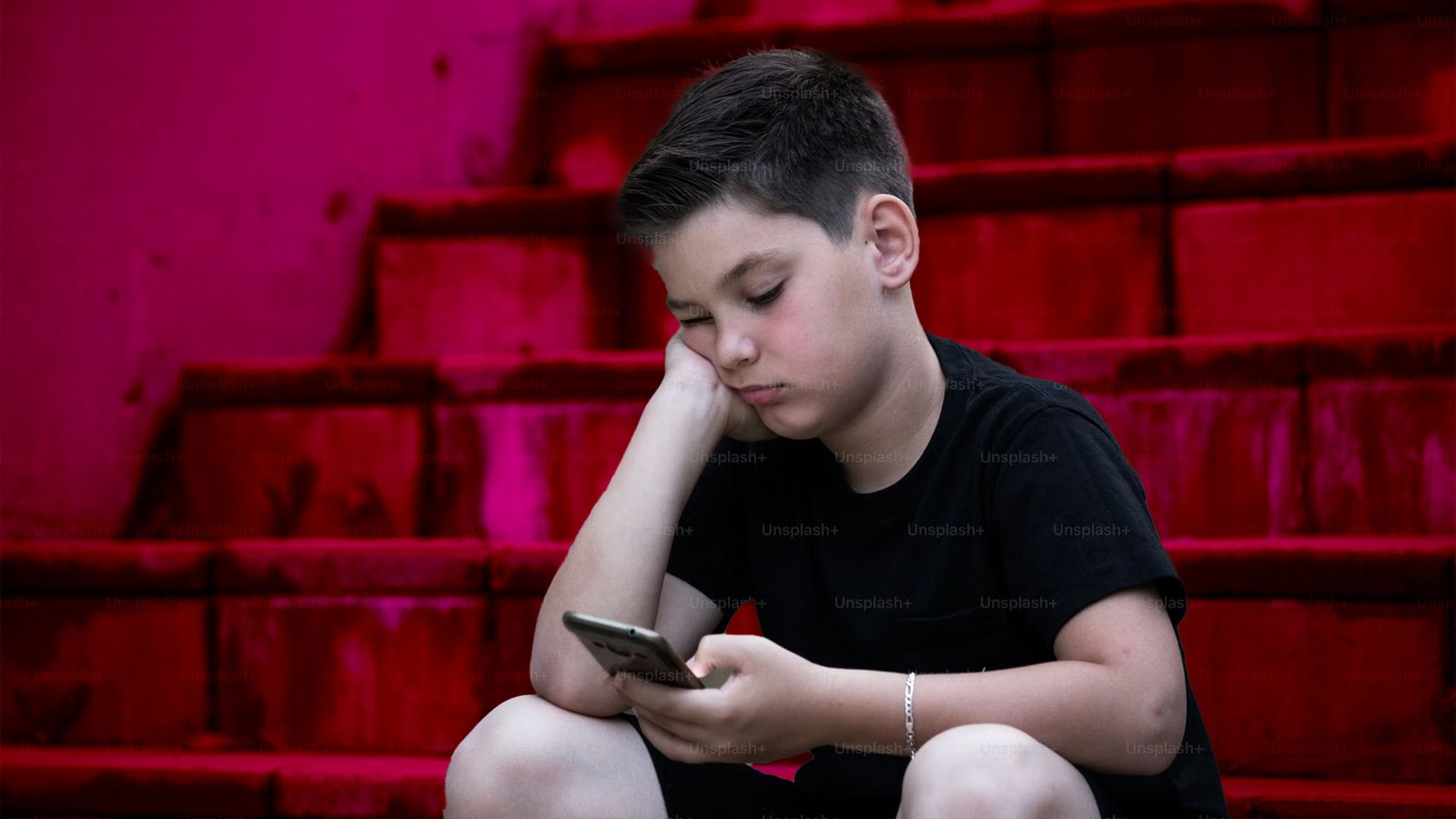
A few months ago, I genuinely believed something was wrong with me. I could not sit still. I jumped between tasks. My attention ruptured every few minutes. I had started to wonder, seriously, whether I had ADHD. Then one day I put the phone down not for a detox, just by accident and I stayed focused for two hours straight. Nothing was wrong with me. My algorithm had trained me to behave that way, and I had been following its instructions without question.
That is the thing about social media’s damage it does not announce itself. It does not knock. It walks in through a hundred small moments: a reel that made you feel behind, a post that quietly redefined what “normal” looks like, a comment thread that handed you someone else’s anxiety to carry around for the rest of the day. You grasp all of it. And over time, you start living inside a version of yourself that was assembled by an algorithm, not by you.
“The most dangerous influence is the one you never notice. Social media does not tell you who to be — it just keeps showing you who you are not.”
This article is not about quitting social media. It is about something more urgent: knowing when it has stopped being yours and started being theirs.
Feminism in Pakistan: The Bold Struggle Between Faith, Culture, and Equality
The Algorithm Is Not Your Friend It Is Your Keeper
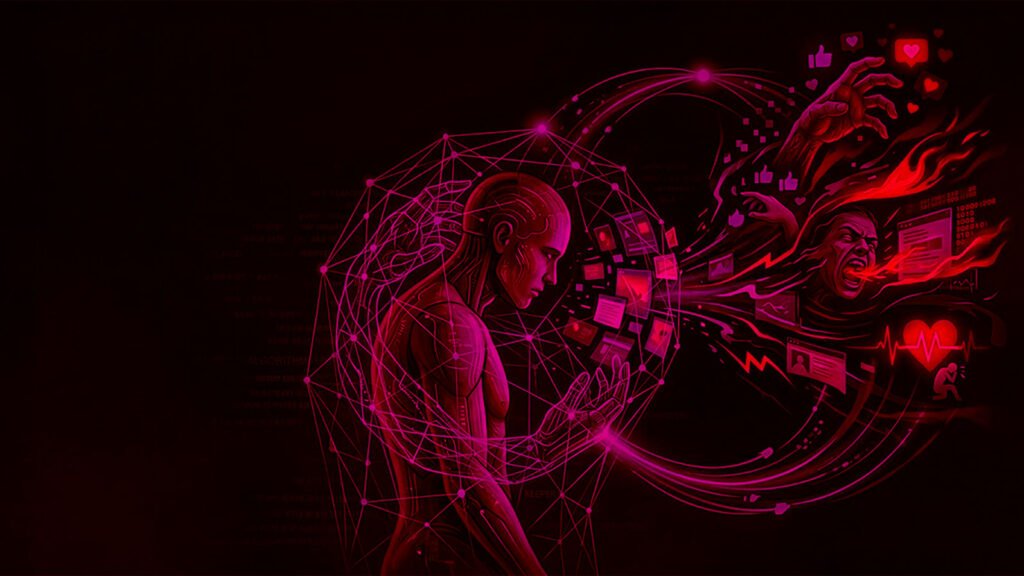
Algorithms are not neutral. They are not serving you content you enjoy; they are serving you content that keeps you engaged. Those are very different things. Engagement is driven by emotion most reliably by anxiety, envy, and outrage. So the algorithm learns what weakens you, and it delivers more of it, because a destabilized user scrolls longer.
This is not a conspiracy. It is just how the attention economy works. Your discomfort is a resource. Your self-doubt is a signal. The more the feed unsettles you, the more data it collects, the better it becomes at keeping you locked in.
You did not develop an unhealthy relationship with comparison overnight. You were slowly trained into it, one recommended post at a time.
You can also Submit Your Piece: Quill Quest Magazine introduce Questra for those who has a beacon, wield the pen to express, explore, and enlighten. We welcome your original articles, essays, and blog posts that resonate with our ethos of literature, culture, art, and more.
When Did Someone Else’s Life Become the Standard for Yours?
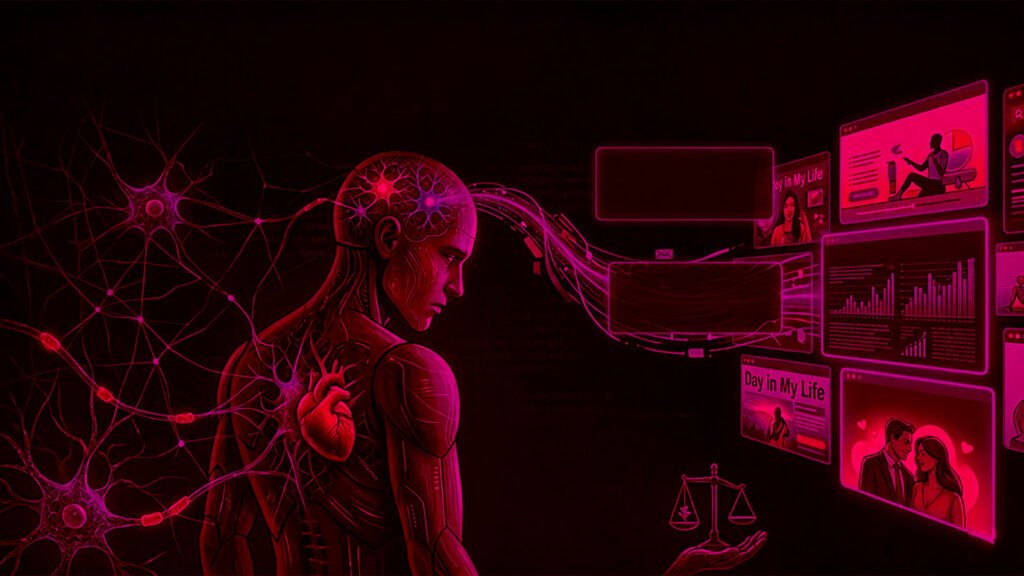
Somewhere between the productivity influencers and the wellness accounts and the “day in my life” videos, a strange thing happens. You stop measuring yourself against your own goals and start measuring yourself against a feed full of curated strangers. You did not agree to that competition. No one asked you. But you are in it now, and the rules keep changing because the content never stops.
Someone posts about waking up at 5 a.m. and you feel lazy. Someone documents their side hustle income and you feel behind. Someone shares their relationship and you feel alone. None of these people set out to make you feel that way. But the algorithm placed them in front of you at exactly the right moment, and you made the comparison automatically, the way the brain is wired to do.
The comparison itself is not the problem. The problem is that you are comparing your Core life your doubts, your struggles, your quiet moments to someone else’s Outer performance. That is not a fair contest. It was never meant to be.
The Clear Fact: Modesty Isn’t Just for Women, Why Men Must Lower Their Gaze?
You Are Not Broken. You Are Mirroring
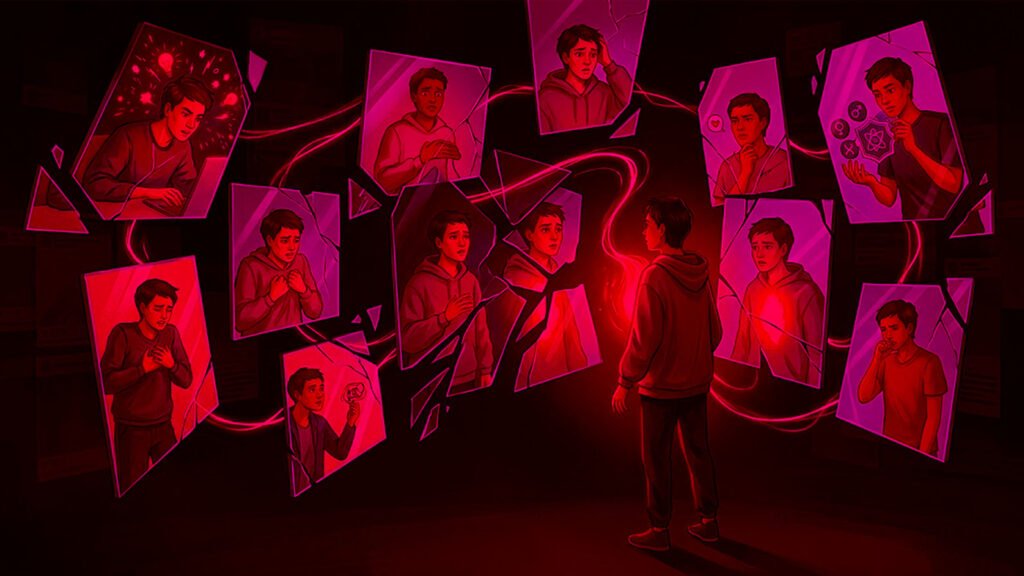
Here is something that took me time to understand: a lot of what people believe about themselves after heavy social media use is not self-knowledge. It is a reflection. The feed shows you a hundred variations of human experience and your brain starts pattern-matching. Someone describes their ADHD and it sounds familiar. Someone details their anxiety and you recognize pieces of it. Someone labels their personality type and suddenly you are building an identity around a framework a stranger handed you.
This is not always harmful. Sometimes it creates genuine understanding. But it becomes dangerous when you stop doing the work of actually knowing yourself and outsource that task to whoever happened to appear in your feed today. Your identity should not be gathered from content. It should come from the inside out.
“You are not a compilation of trends, diagnoses, and aesthetic moods you found online. You are a person with a history, a perspective, and a mind that belongs to you.”
What Does It Actually Mean to Have Your Own Opinion?
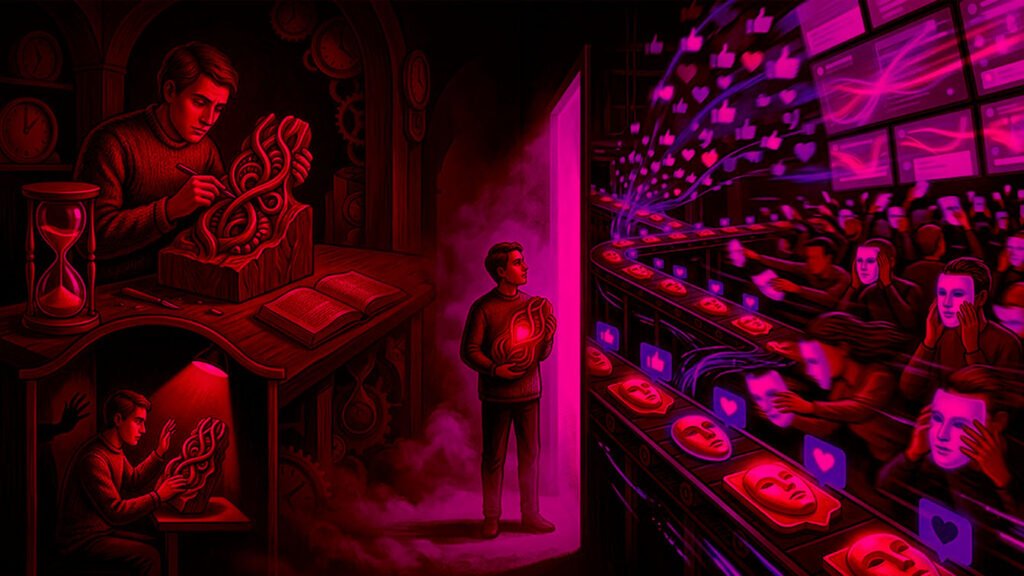
Forming an opinion used to require time. You would encounter an idea, sit with it, push against it, revise it, and eventually arrive at a position that was actually yours. Social media has compressed that process into seconds. You see a take, you feel a reaction, you share or like before the thought has had time to settle. After enough cycles of this, you stop forming opinions. You start adopting them.
Having your own opinion is not about being skeptical. It is not about rejecting everything popular. It is about doing the work of actually thinking noticing your first reaction, questioning it, and deciding whether it holds up when no one is watching. It means being willing to believe something that will not get you any likes. It means sitting with uncertainty instead of reaching for the nearest available take.
That is harder than it sounds in an environment designed to reward speed and agreement. But it is the only way to have a mind that is genuinely yours.
From Y2K Dreams to TikTok Feeds: The Nostalgia Trend 2025 Culture Explained
No One Is Forcing You So Why Does It Feel Like They Are?
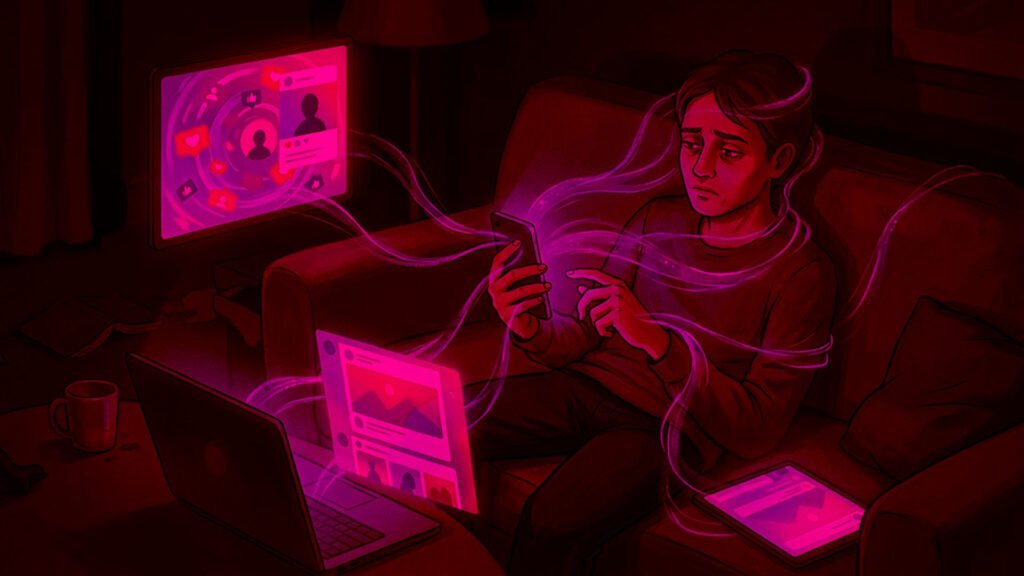
Here is the uncomfortable truth: no one is making you do any of this. There is no gun. There is no contract. You are a free person with full control over your own attention. And yet millions of people, every day, hand that attention over without negotiating the terms.
The reason it feels compulsory is that the platforms are built to feel that way. Variable reward schedules, social validation mechanics, fear of missing out, and the illusion of connection all work together to make disengagement feel like a loss. You are not weak for finding it hard. You are a human being up against a system that employs some of the best behavioral scientists in the world.
But knowing that does not remove your agency. It actually expands it. When you understand the mechanism, you can make a real choice instead of a reactive one. You can use the platform or put it down not because someone told you to, but because you decided what your time and attention are worth.
China Marriage Degree: Boosting Wedding Planning, Matchmaking, and Family Culture
Breaking the Loop Without Burning Everything Down
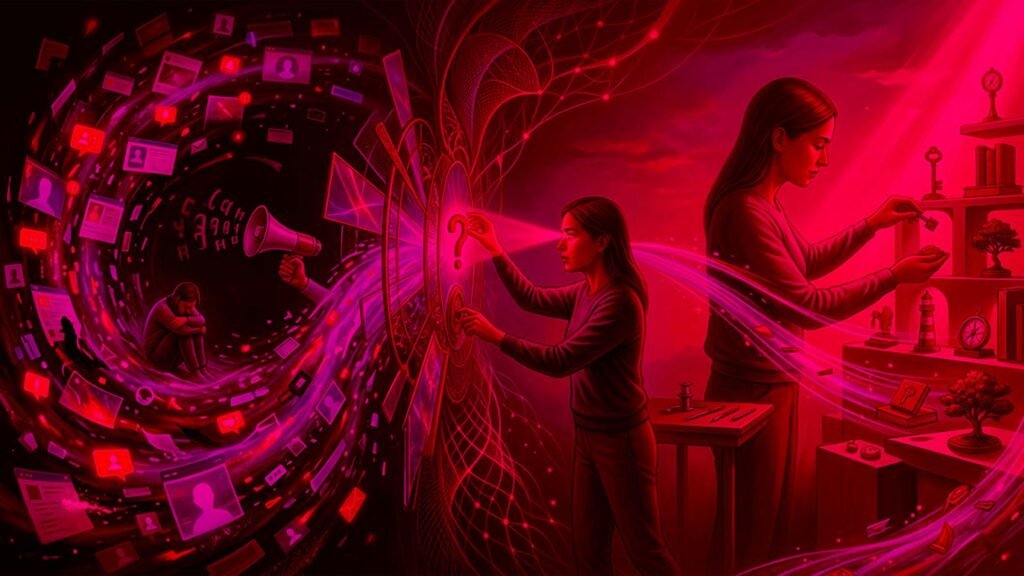
You do not have to delete every app and disappear into the woods. Recovering your mind from the algorithm is quieter than that. It starts with one question, asked honestly: is this content I Searched for or content that was placed in front of me?
Notice when you finish a scroll session and feel worse than when you started. Notice which accounts make you feel small. Notice when you are about to share an opinion and ask yourself whether you actually believe it or whether you just saw it three times today and it stuck. These are small habits, but they build a completely different relationship with what you consume.
The goal is not purity. The goal is authorship. Being the person who decides what goes into your mind, rather than the person who receives whatever the algorithm decides to send.
NYC’s New Power Family: Inside the World of Zohran Mamdani, Rama Duwaji, & Mira Nair
The Person You Are Offline Is the Real One
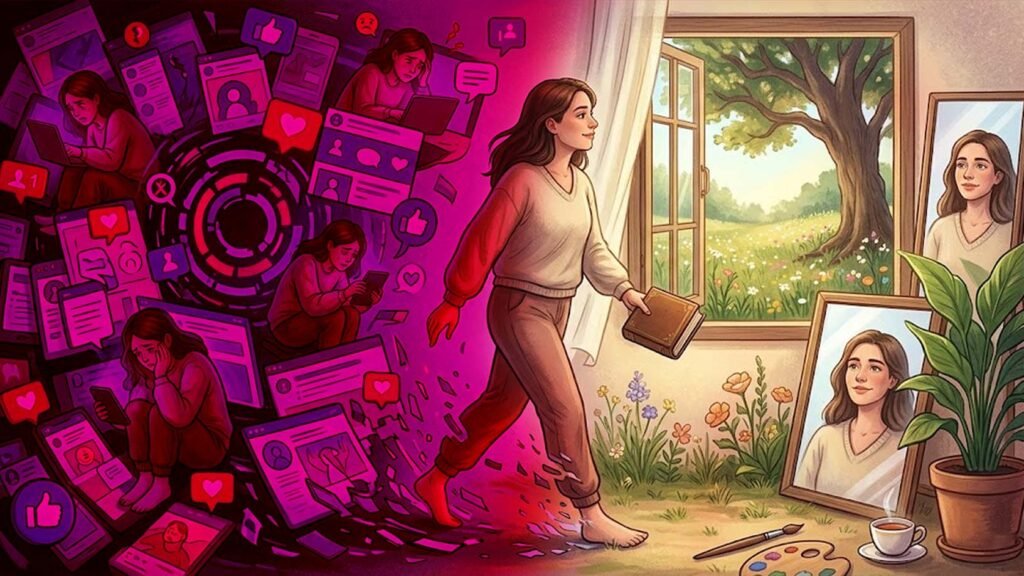
What happened to methe false self-diagnosis, the ruptured attention, the slow sneak of someone else’s anxiety into my daily life was not unique to me. It is the shape the algorithm loop takes in most people. It is quiet, it is gradual, and by the time you notice it, it already feels normal.
The person you are when you are not performing for a feed, not comparing, not consuming that is not an absence. That is the actual you. The one with real opinions formed slowly, with genuine moods that do not require documentation, with a pace of life that belongs to you rather than to the notification cycle.
You do not need to be anyone else’s mirror. You do not need to live at the speed of the feed. You are not behind. You are not broken. You are just a person who has been inside the loop long enough to forget what it was like before it.
Step outside it. Even briefly. See what is still there.






The writer’s abilities to explain these ideas in an understandable and organic manner is what I admire most. It is relatable, genuine, and easily understood to connect to. A truly well written and honest article 👍
The author nailed it. One line that caught my attention: “You stop measuring yourself against your own goals and start measuring yourself against a feed full of curated strangers.” The writer explains the quiet damage of social media really well.
It’s actually a real thing tbh.