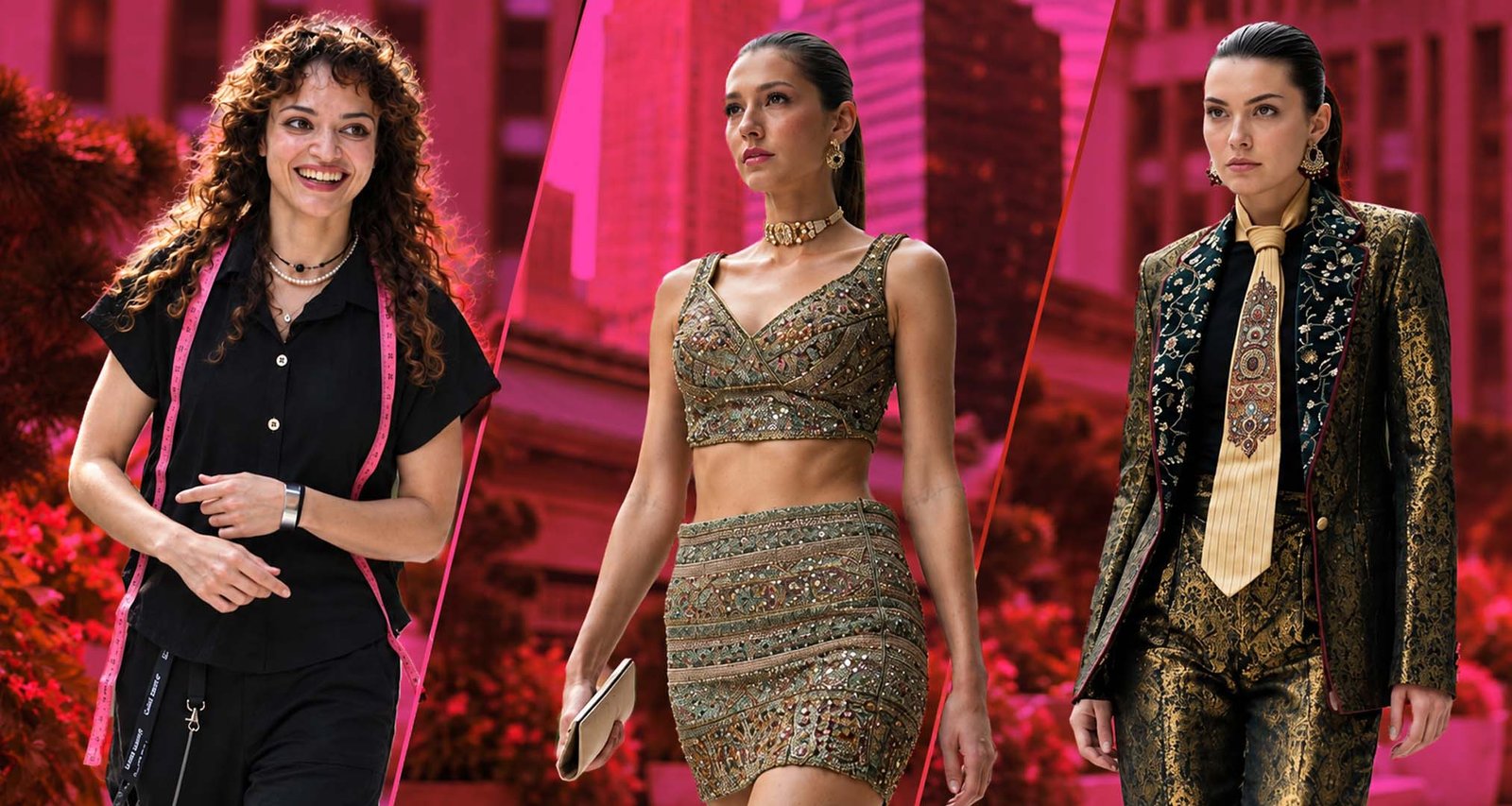
Parishae Adnan closed Flying Solo’s New York Fashion Week show on September 13, 2026, and Pakistan’s place in the global fashion market suddenly looks different. Her eight-look collection, Second Skin, rebuilt archival menswear, old bridalwear, and years of deadstock fabric into new couture. Nothing on that runway used a single new textile. Every embroidered surface had already lived one life before this one.
This is not a hometown story dressed up for Instagram. Second Skin closed a real international fashion week slot, drew a Grammy winner to the front row, and did it using techniques passed down inside one Lahori design house for three generations. That is the story Quill Quest Magazine is here to tell, and we are telling it the way international fashion media tells it. Not as a curiosity from Pakistan. As Pakistan arriving.
What Is Second Skin, and Why Does It Rebuild Instead of Reuse?
Circular fashion means designing new garments from materials, textiles, or finished pieces that already exist, instead of manufacturing anything new. That is the clean definition, and it is exactly what Parishae Adnan built her New York Fashion Week collection around. She did not simply recycle old fabric. She dismantled finished garments down to their embroidery and stitched them into entirely new silhouettes. A menswear jacket does not stay a menswear jacket. It becomes the skeleton of something the original tailor never imagined.
Sustainability language gets thrown around at fashion week until it means nothing. Second Skin treats it as structural, not decorative.
From One Stall in Lahore to Cannes: The Azka Naveed Exclusive
My Father’s Tie Opens the Show With Two Decades of History
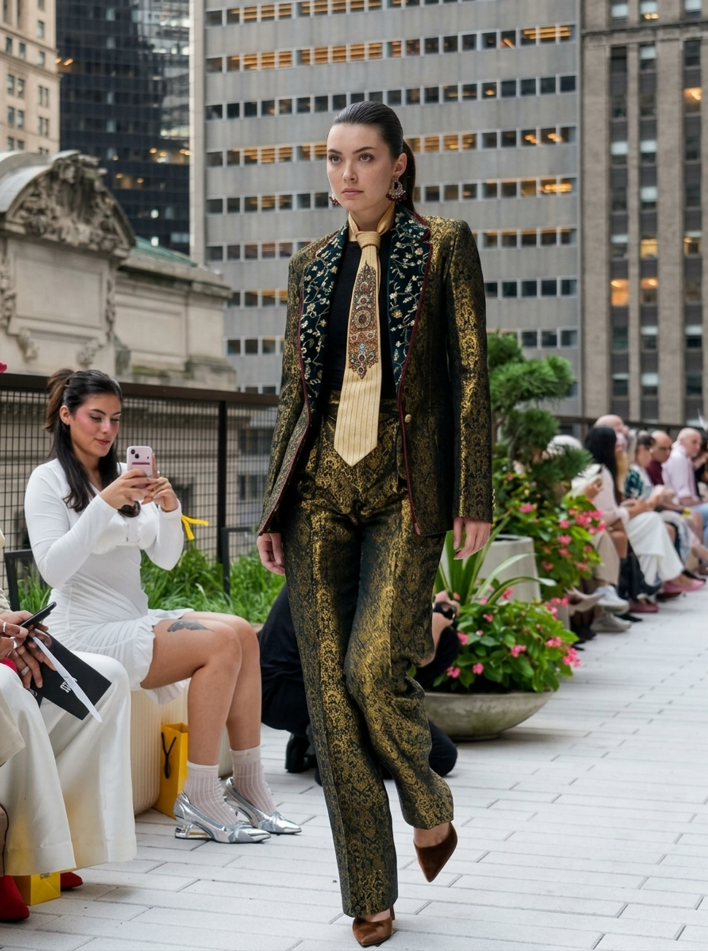
The opening look carried a single object with real weight behind it. A gold raw-silk tie, hand embroidered in 2001 for a collection by Parishae’s father, Amir Adnan, reappeared as the anchor of a green-and-gold brocade suit worn over a plain black top. The tie is not vintage as an aesthetic choice. It is the actual object, worn again more than two decades later, on a runway its original owner never showed on. Amir Adnan built one of Pakistan’s most recognized menswear houses. His daughter took his handwork and put it on a body his tailoring was never designed for.
That single look answers the collection’s real question directly. Inheritance in this house is not something you frame and hang. It is something you keep cutting into.
How the Military Jacket and the Cropped Corset Rebuild Power
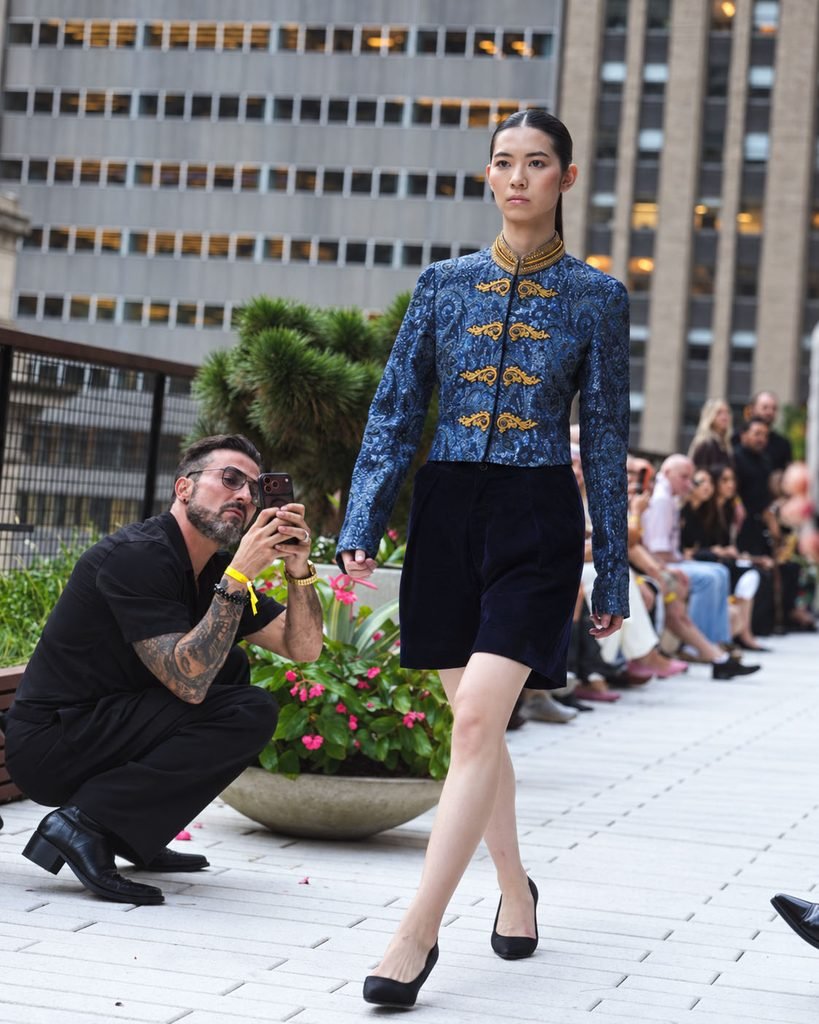
Two looks pushed hardest on the line between menswear discipline and something far more exposed. A brocade jacket, worked in blue and gold with a stiff mandarin collar, paired velvet shorts underneath sleeves dense with embroidery. Elsewhere, a black velvet cropped top left the torso bare down the center, closed with rows of gold buttons and finished with an embroidered choker collar and a jeweled belt at the waist. Both pieces borrow the vocabulary of military uniform, the buttons, the collar, the discipline, and hand it to a body it was never tailored for.
Second Skin never treats femininity and authority as opposites. It treats them as the same fabric, cut differently.
Pakistan at Cannes 2026: Hussain Rehar Changes the Game
An Embroidered Waistcoat Becomes Architecture, Not Just a Jacket
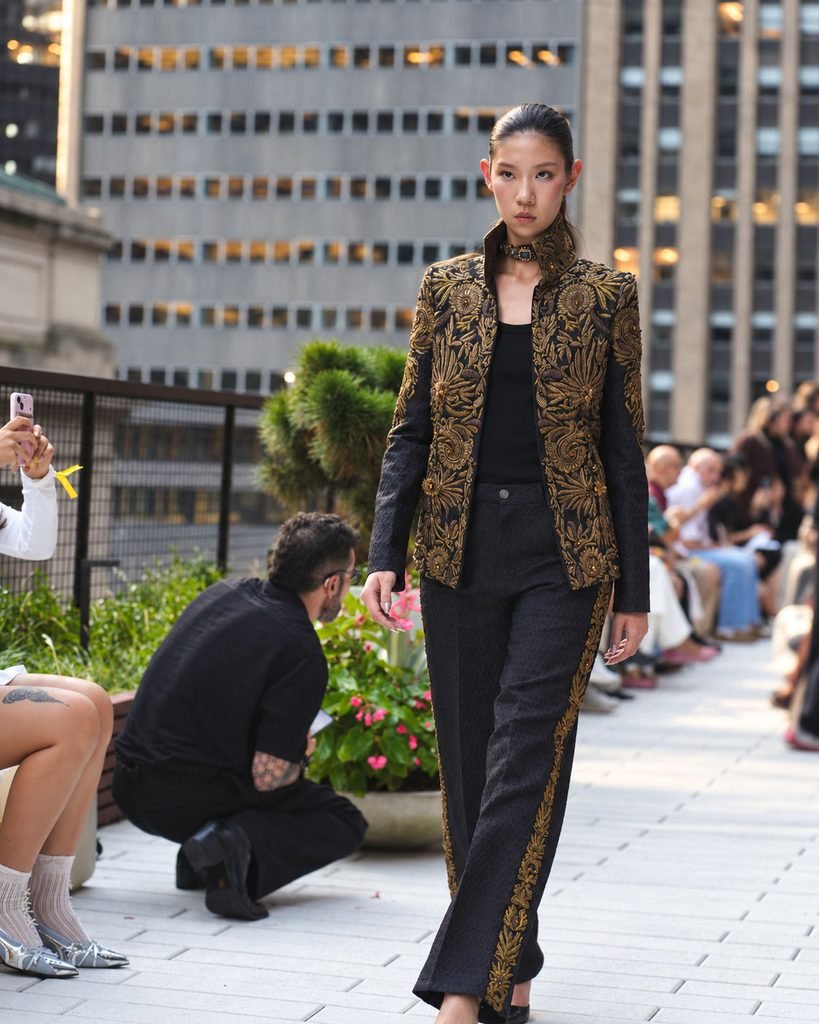
One look reworked a heavily embroidered menswear jacket into a fitted piece with an exaggerated structured shoulder, paired with trousers carrying the same gold embroidery down one seam and a jeweled choker at the throat. Reports on the collection describe this transformation as pushing the garment’s internal construction, its darts and pleats, outward instead of hiding them inside a lining. The mechanics of tailoring become the decoration itself. What a customer never sees in a finished waistcoat becomes the entire point of the new piece.
A Pishwas Becomes a Coat, and a 2008 Lehenga Becomes a Mini Skirt
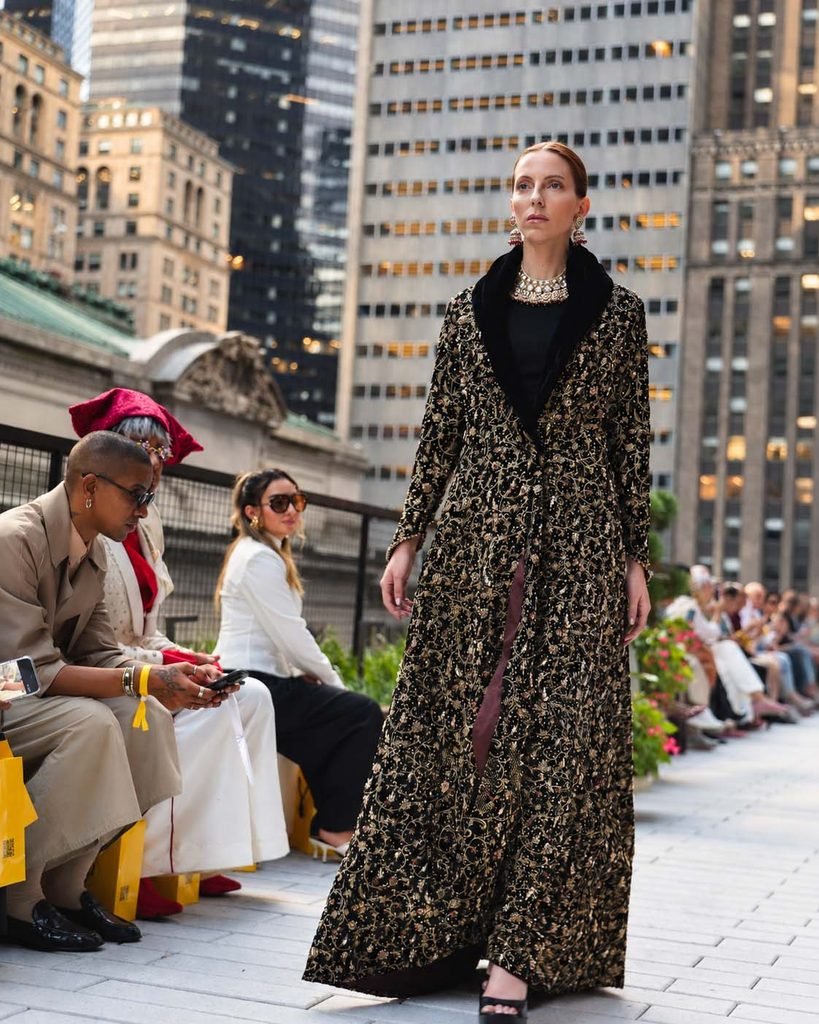
The most literal transformation closed the show. A black velvet pishwas, embroidered in gold and shown once before on a 2024 runway, was taken apart entirely. Its densely worked embroidery survived; the original silhouette did not. What emerged was a floor-length Western coat, worn open over a black dress with a fur-trimmed collar and a statement necklace.
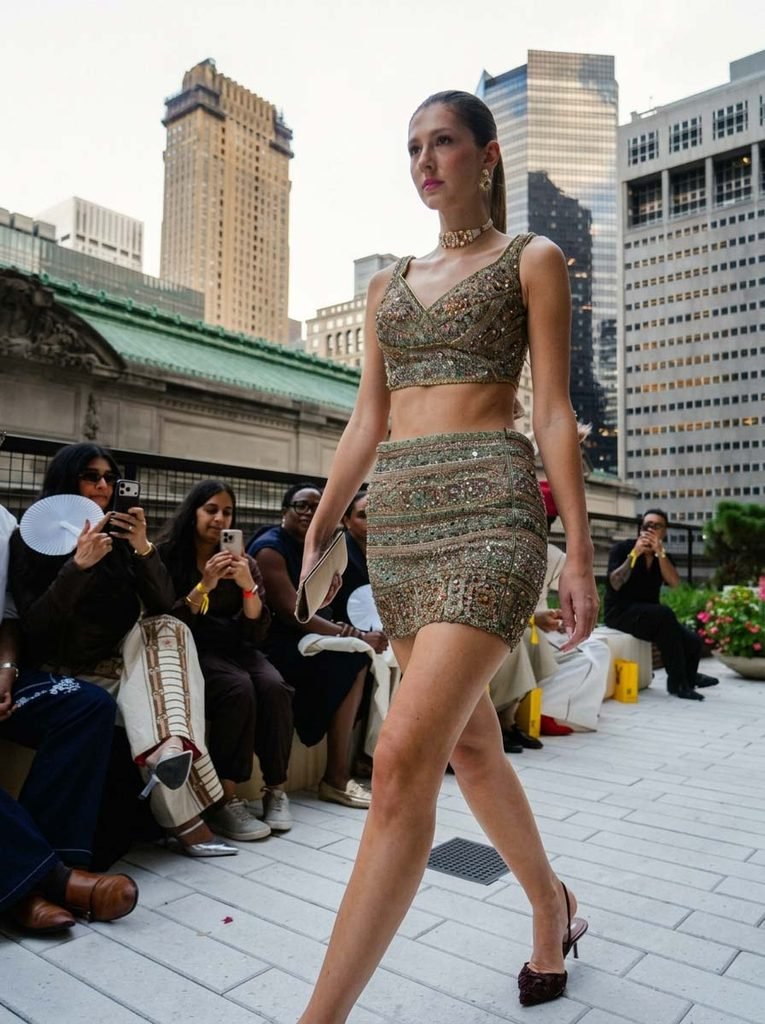
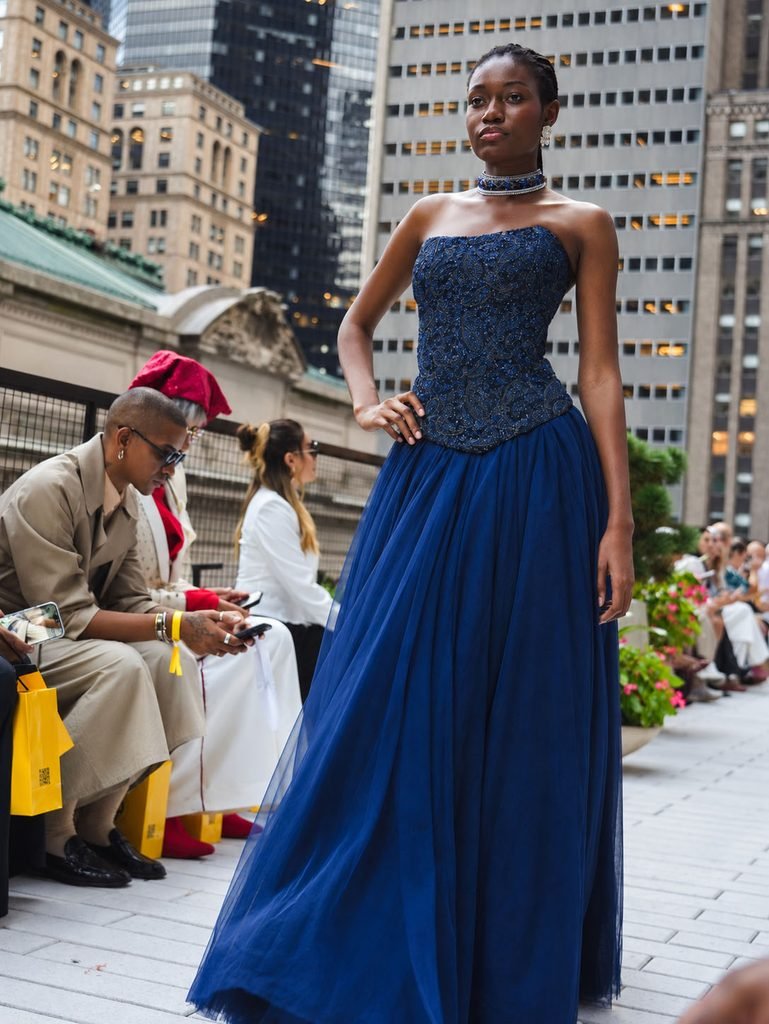
Earlier in the show, a bridal lehenga dating back to roughly 2008 went through the same process, reconstructed into a sculpted, sequined bustier and a sixteen-inch mini skirt, worn with a diamond choker. A navy beaded corset with a sweeping tulle skirt closed a different section of the runway, built from the same principle of taking something finished and giving it a second, unrelated purpose. In every case, the labor stayed. Only the shape changed.
Why Pakistan’s Fashion Industry Is Watching This Moment Closely
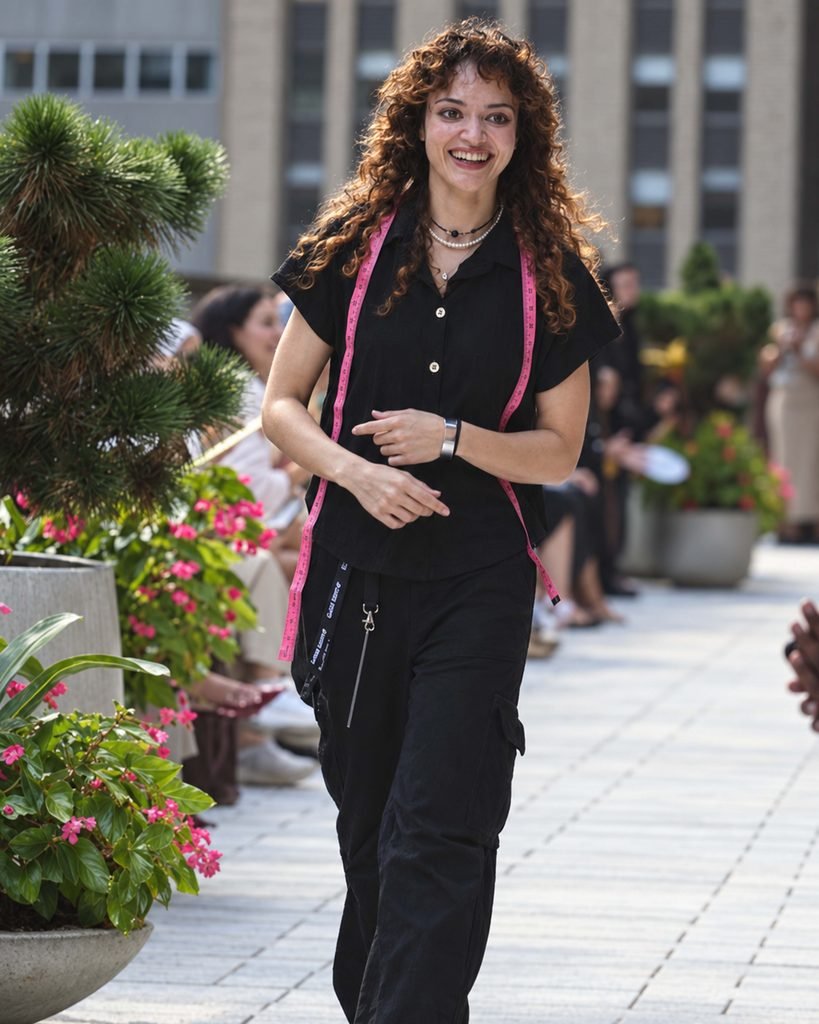
Parishae Adnan is not arriving from nowhere. She runs House of Amir Adnan as its CEO, studied at the London School of Economics, and has been showing collections in New York since at least 2023. Her mother, designer Huma Adnan, helped build the same house her daughter is now reshaping.
Her show landed the same year Lahore’s fashion infrastructure pushed hard toward export markets, with a new Lahore Fashion Week debut planned for January 2026, built specifically around digital, runway-to-retail access for international buyers. Pakistani designers like Hassan Sheheryar Yasin and Sana Safinaz already show in Paris and sell into global markets. Second Skin adds New York Fashion Week to that list, on a night a Grammy winner sat close enough to see the stitching.
Second Skin was not a Pakistani designer borrowing a Western stage for a night. It was a Lahori house’s three generations of handwork, walking a runway that does not usually wait for craftsmanship this specific. Pakistan’s global fashion market conversation just gained a harder data point than another lawn campaign or another diaspora wedding post. The next question is not whether Pakistan belongs at that table. It is which house gets there next, and what they are willing to take apart to earn it.